Welding and Repair of Steel and Iron Castings: Procedures, Filler Metals, and Quality Control
2026-08-28
Meta Description: A technical guide to welding and weld repair of steel and iron castings. Learn SMAW, GMAW, FCAW, and GTAW processes, filler metal selection, preheat and PWHT requirements, repair qualification per ASTM A488 and ISO 11970, and weld quality control.
Almost every casting is welded at some point. Fabrication welds join castings to other components; repair welds restore defects discovered during inspection; and refurbishment welds extend the service life of worn components. In each case, the weld must match — or exceed — the properties of the surrounding cast metal, and it must be performed to a documented, qualified procedure.
Welding castings is different from welding wrought steel. Cast microstructures, segregation, residual stress, and the presence of graphite (in cast iron) demand specific procedures. Get it wrong, and the weld — or the heat-affected zone around it — becomes the weakest link in the part.
This guide covers the engineering of castings welding: processes, filler metals, preheat, post-weld heat treatment, repair qualification, and quality control.
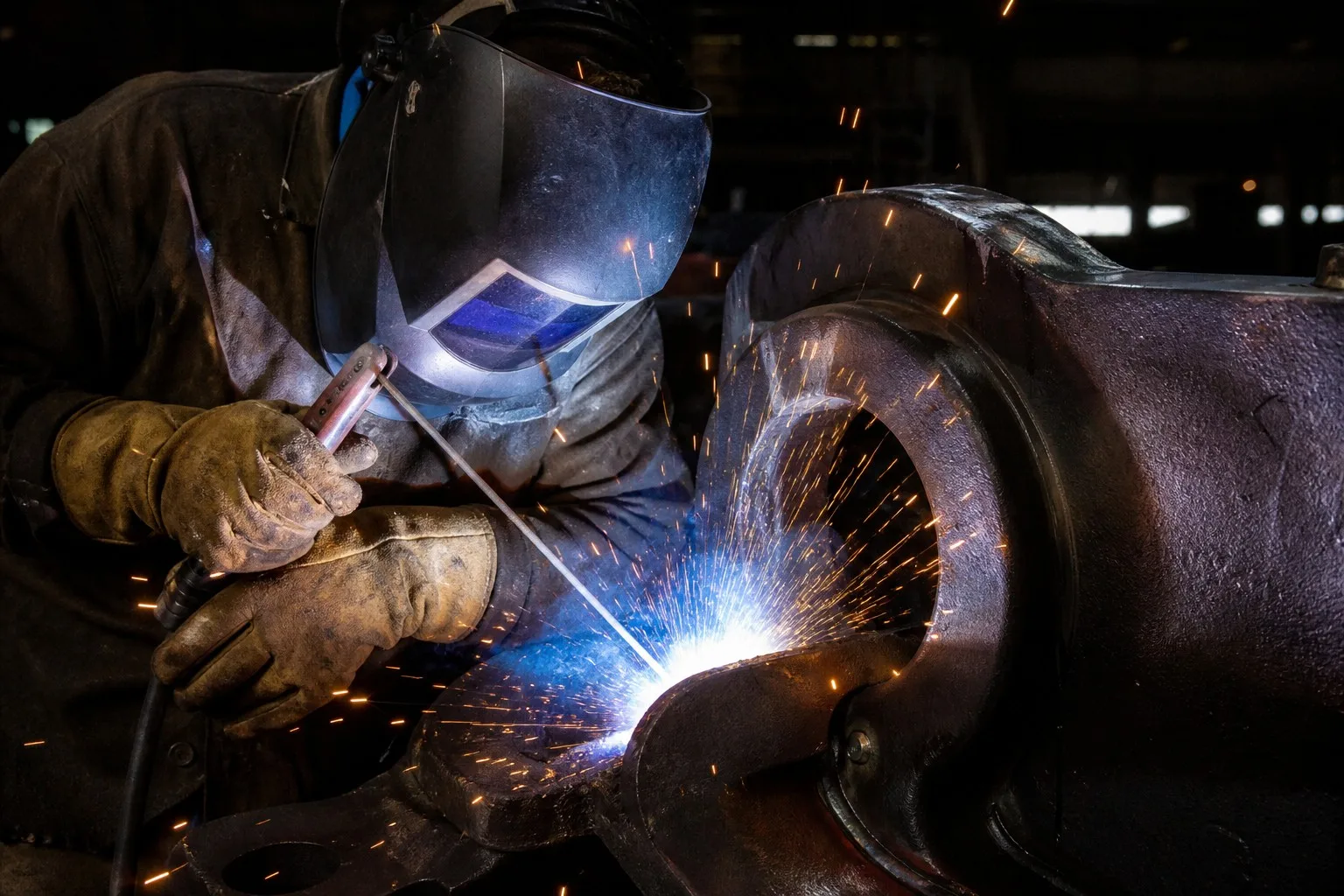
1. Why Castings Are Welded
| Purpose | Examples |
|---|---|
| Fabrication joining | Welding cast lugs, brackets, or piping connections to a body |
| Defect repair | Filling shrinkage, porosity, sand inclusions found by NDT |
| Salvage of over-machined areas | Rebuilding a machined surface that exceeded tolerance |
| Refurbishment | Rebuilding worn slag pots, crusher liners, mold plates |
| Modification | Adding features not in the original design |
Every weld on a critical casting must be documented: who welded, what procedure, what filler, when, and how it was inspected.
2. Welding Processes for Castings
| Process | Abbreviation | Best Application |
|---|---|---|
| Shielded metal arc | SMAW (stick) | Repair welding, field work, all positions |
| Gas metal arc | GMAW (MIG) | Production fabrication, carbon steel |
| Flux-cored arc | FCAW | Heavy sections, high deposition, out-of-position |
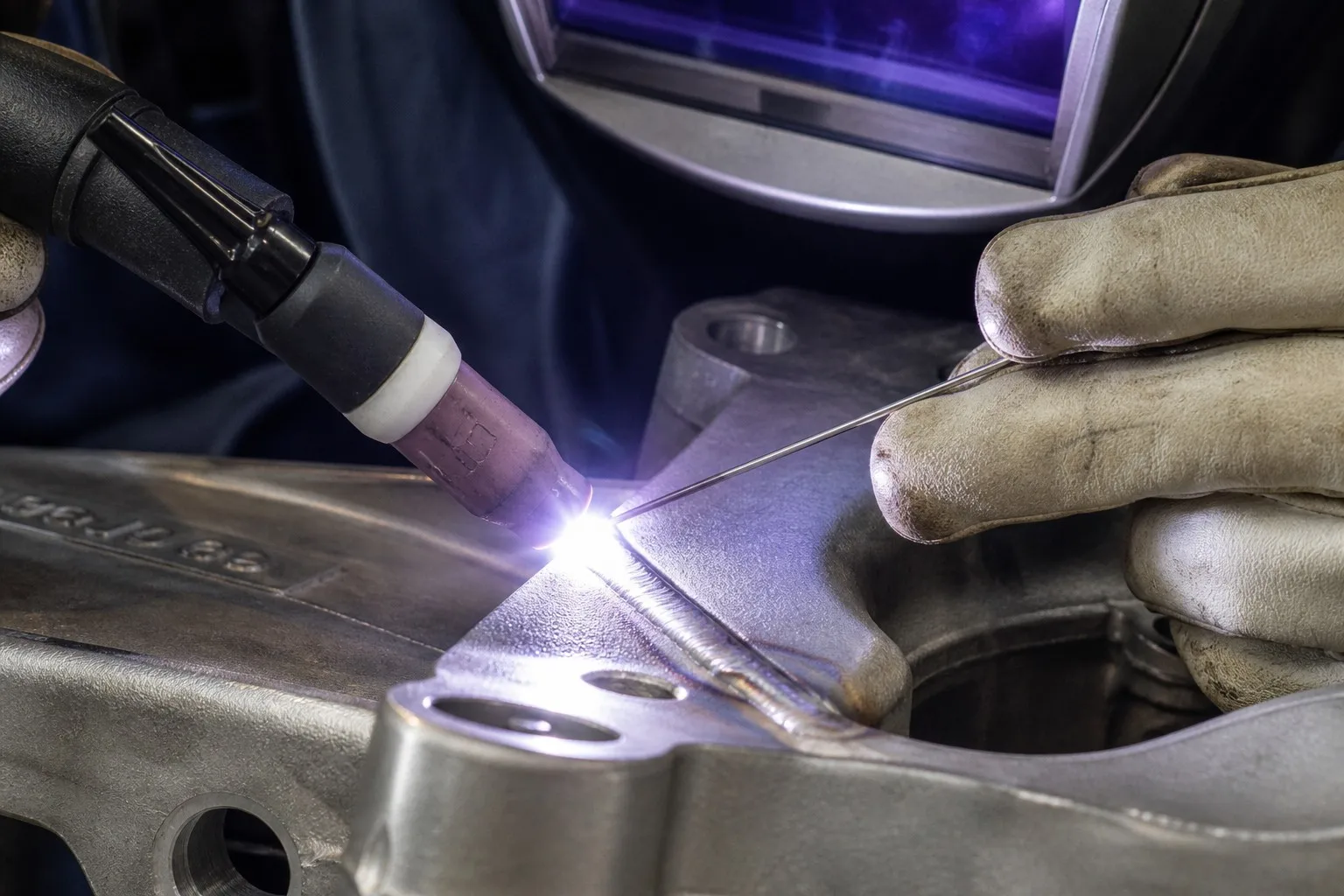
| Gas tungsten arc | GTAW (TIG) | Stainless and critical welds, root passes |
| Submerged arc | SAW | Thick sections, automated repair of large defects |
Selection logic:
- Carbon and low-alloy steel castings: SMAW or GMAW/FCAW with matching low-hydrogen consumables
- Stainless steel castings: GTAW (critical) or GMAW with matching chemistry
- Cast iron: SMAW with nickel-based electrodes (most reliable), or specialized cast iron electrodes
3. Filler Metal Selection
3.1 Carbon and Low-Alloy Steel Castings
| Base Material | Typical Filler | Standard |
|---|---|---|
| WCB carbon steel | E7018 (SMAW), ER70S-6 (GMAW), E71T-1 (FCAW) | AWS A5.1/A5.18/A5.20 |
| 1.25Cr-0.5Mo (WC6) | E8018-B2 | AWS A5.5 |
| 2.25Cr-1Mo (WC9) | E9018-B3 | AWS A5.5 |
| Low-temp LCB/LCC | E7018-1 (impact tested) | AWS A5.1 |
| Ductile iron (fill) | ENi-CI or ENiFe-CI (nickel based) | AWS A5.15 |
Rule: match strength, match chemistry, control hydrogen. Low-hydrogen electrodes (e.g., E7018) are mandatory for critical castings; electrodes must be stored and baked per manufacturer requirements.
3.2 Stainless Steel Castings
| Base Material | Typical Filler |
|---|---|
| CF8 (304-type) | ER308L / E308L |
| CF8M (316-type) | ER316L / E316L |
| CF3M (316L-type) | ER316L (low carbon) |
| Duplex CD3MN | ER2209 (duplex filler) |
| 17-4PH | ER630 (17-4PH filler) |
Low-carbon fillers minimize carbide precipitation (sensitization) in the heat-affected zone.
3.3 Cast Iron (Gray and Ductile)
| Material | Filler | Notes |
|---|---|---|
| Gray iron repair | ENi-CI (pure nickel) | Soft, machinable weld |
| Ductile iron repair | ENiFe-CI (nickel-iron) | Higher strength, similar CTE |
| Ductile iron fabrication | ER70S-6 + preheat, or Ni-based | Joint design critical |
Nickel-based fillers are preferred for cast iron because their ductility absorbs thermal strain and they produce machinable welds.
4. Preheat and Interpass Temperature
4.1 Why Preheat Matters
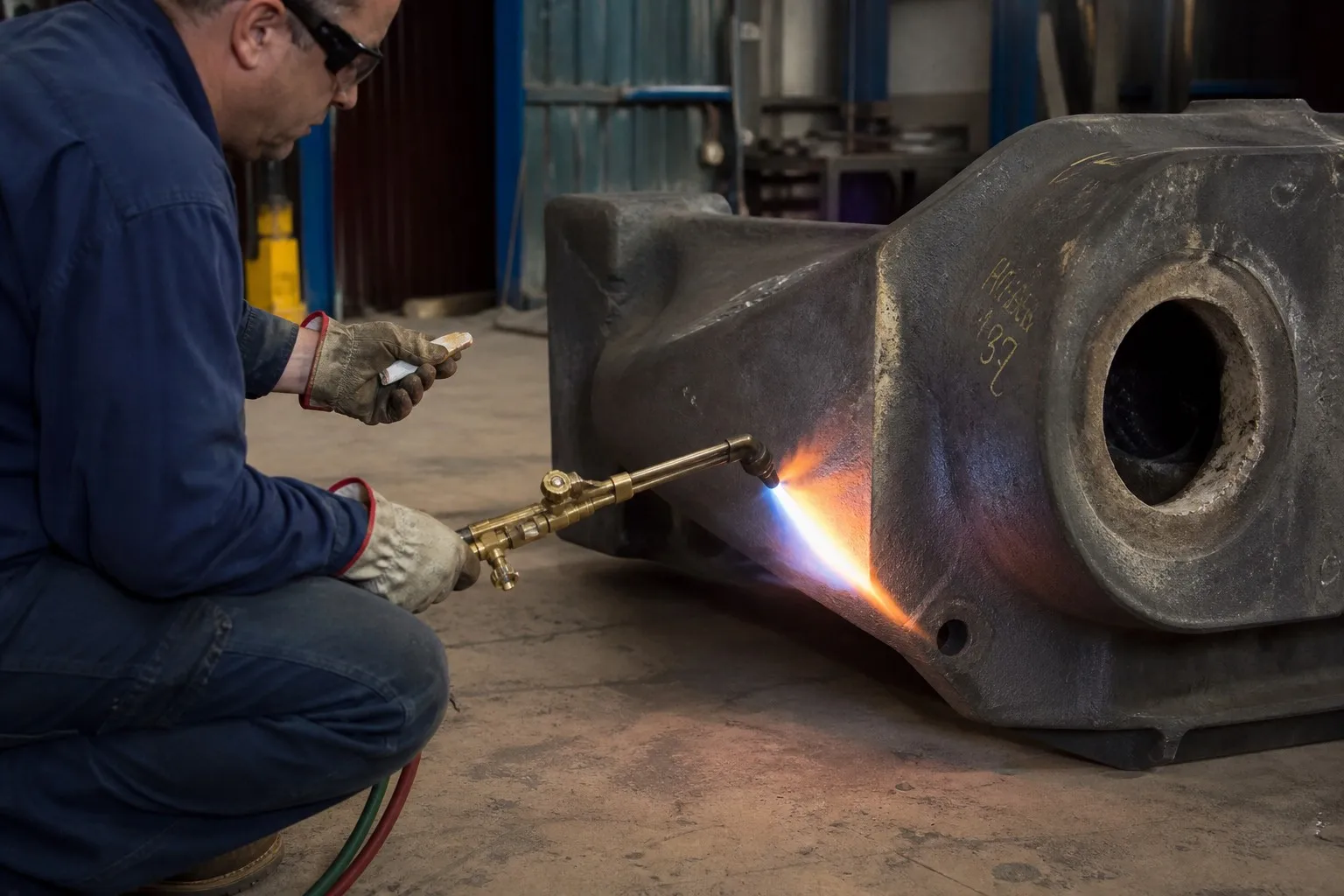
Preheat:
- Reduces cooling rate, preventing hard martensite in the HAZ
- Allows hydrogen to diffuse out, preventing hydrogen-induced cracking
- Reduces thermal shock and distortion
- Ensures the weld zone reaches minimum temperature before the first pass
4.2 Typical Preheat Temperatures
| Material | Minimum Preheat |
|---|---|
| WCB carbon steel | 15-100 °C (section dependent) |
| 1.25Cr-0.5Mo | 150-200 °C |
| 2.25Cr-1Mo | 200-250 °C |
| CF8/CF8M stainless | 10-15 °C (usually none) |
| Duplex stainless | 10-15 °C (max 150 °C interpass) |
| Gray/ductile iron | 200-350 °C (low-heat techniques preferred) |
Preheat is measured with contact pyrometers or temperature-indicating crayons; interpass temperature is verified between passes.
5. Post-Weld Heat Treatment (PWHT)
5.1 Purpose
- Stress relief — reduces residual stresses from welding
- Hydrogen removal (baking) — for hydrogen-sensitive steels
- Tempering — softens hardened HAZ microstructures
- Restores properties in creep-resistant alloys
5.2 PWHT Parameters by Material
| Material | PWHT Temperature | Hold Time |
|---|---|---|
| WCB carbon steel | 595-675 °C | 1 h per 25 mm (min 1 h) |
| 1.25Cr-0.5Mo | 650-700 °C | 1 h per 25 mm |
| 2.25Cr-1Mo | 675-740 °C | 1-2 h per 25 mm |
| CF8M (when required) | Solution anneal 1040 °C | Per thickness |
Important: PWHT of stainless steels is generally solution annealing, not low-temperature stress relief (which can cause sensitization). Carbon steel castings often combine weld PWHT with the casting's own stress-relief cycle.
6. Repair Qualification: WPS, WPQR, and Standards
6.1 Key Standards
| Standard | Scope |
|---|---|
| ASTM A488 | Steel castings — welding qualification (procedure and personnel) |
| ISO 11970 | Specification for welding of steel castings |
| AWS D1.1 | Structural welding (reference for joint design) |
| ISO 14732 | Welding operator qualification |
| PED 2014/68/EU | Pressure equipment (valve bodies, fittings) |
6.2 The Qualification Chain
- WPS (Welding Procedure Specification) — written procedure: process, filler, preheat, interpass, PWHT, position, parameters
- WPQR (Welding Procedure Qualification Record) — qualification test proving the WPS produces sound, conforming welds
- Welder qualification — each welder qualified per process and position (ISO 9606 or ASME IX)
- Repair procedure — excavation limits, weld map, re-inspection requirements documented on each repair
6.3 Repair Weld Requirements
| Requirement | Typical Rule |
|---|---|
| Defect excavation | Complete removal confirmed by NDT (MT/PT) |
| Cavity geometry | Rounded, minimum radius; no sharp notches |
| Weld map | Repair location documented on drawing/photo |
| Filler traceability | Heat number recorded per repair |
| Re-inspection | Full NDT of repaired area + surrounding HAZ |
| Repeat repairs | Same area limited (e.g., 2-3 repairs max) then engineering review |
7. Welding Cast Iron: Special Considerations
Cast iron welding requires the most care:
| Issue | Mitigation |
|---|---|
| High carbon causes hard white iron in HAZ | Low heat input, peening, controlled cooling |
| Cracking from thermal shock | Preheat 200-350 °C, cool slowly |
| Graphite weakens weld strength | Nickel fillers, joint design |
| Porosity from gas evolution | Clean surfaces, dry electrodes, proper technique |
| Machinability after weld | Nickel-based fillers remain machinable |
For ductile iron castings, many foundries prefer cold welding (low heat, nickel electrodes, no preheat) for cosmetic repairs and hot welding (preheated, slow-cooled) for structural repairs.
8. Weld Defects and Their Causes
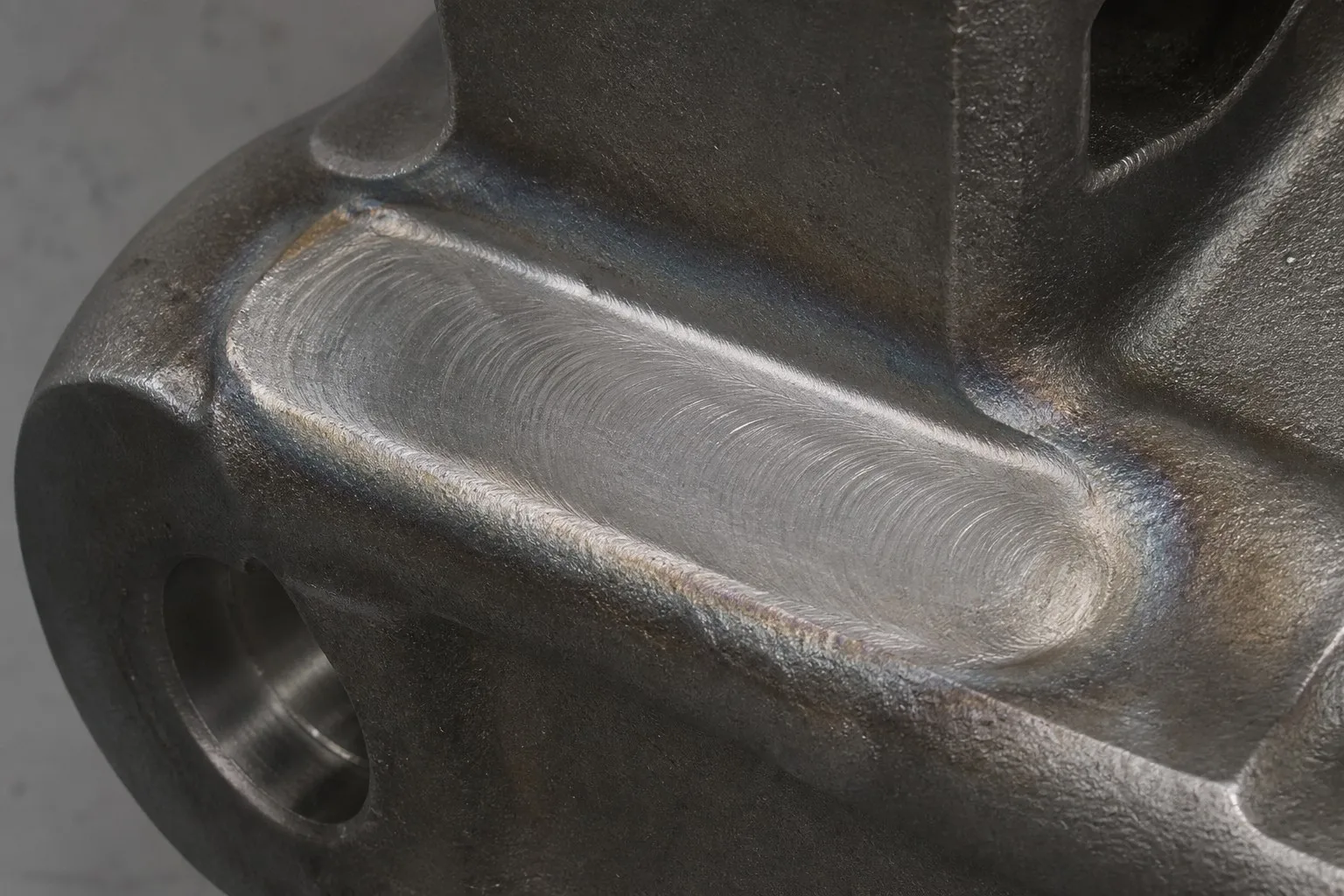
| Defect | Cause | Prevention |
|---|---|---|
| Porosity | Contamination, moisture, inadequate shielding | Clean surfaces, dry consumables, gas coverage |
| Lack of fusion | Low heat, wrong technique | Proper parameters, technique |
| Undercut | Excessive current/voltage | Parameter control |
| Slag inclusion | Incomplete slag removal between passes | Interpass cleaning |
| Hydrogen cracking | Hydrogen + hard HAZ + restraint | Low-hydrogen electrodes, preheat, PWHT |
| Distortion | Thermal contraction | Restraint, sequence, peening |
9. Quality Control of Welds
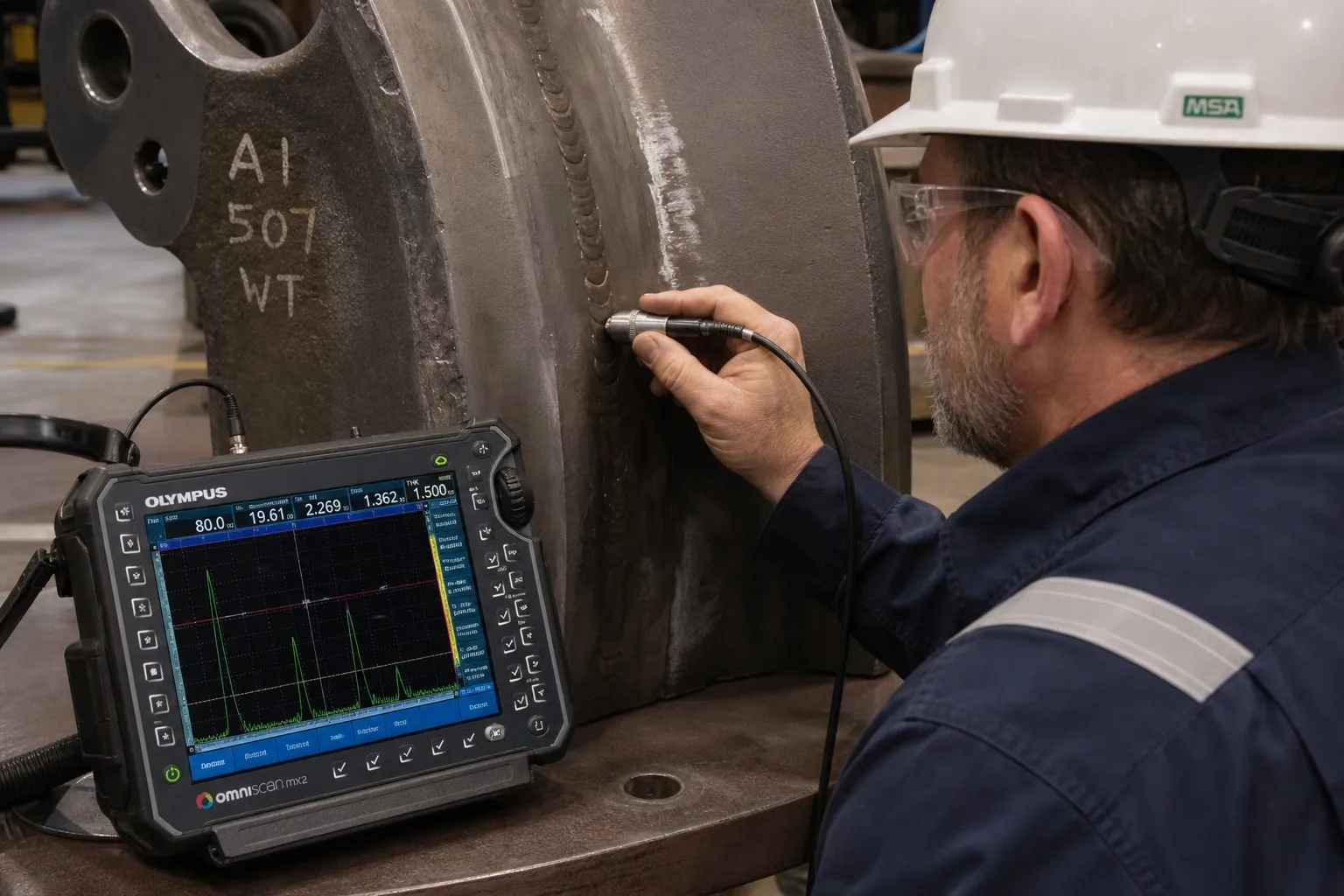
| Check | Method |
|---|---|
| Visual (VT) | All welds — profile, cracks, undercut, porosity |
| Magnetic particle (MT) | Ferromagnetic — surface and near-surface cracks |
| Dye penetrant (PT) | Stainless/non-ferromagnetic — surface cracks |
| Ultrasonic (UT) | Volumetric — internal defects |
| Radiographic (RT) | Volumetric — critical welds |
| Hardness survey | HAZ hardness verification after PWHT |
| Documentation | WPS number, welder ID, filler heat, NDT reports |
10. Welding Repair in Practice
A disciplined repair workflow:
- NDT identifies defect — location, size, type recorded
- Excavation — grind/gouge to clean sound metal; NDT verify complete removal
- Weld repair — qualified WPS, qualified welder, documented parameters
- Grind flush — profile to casting surface
- Heat treatment — per material requirement (PWHT or local stress relief)
- Re-inspection — NDT of repaired area; dimensional check
- Documentation — weld map, filler heat, reports added to casting record
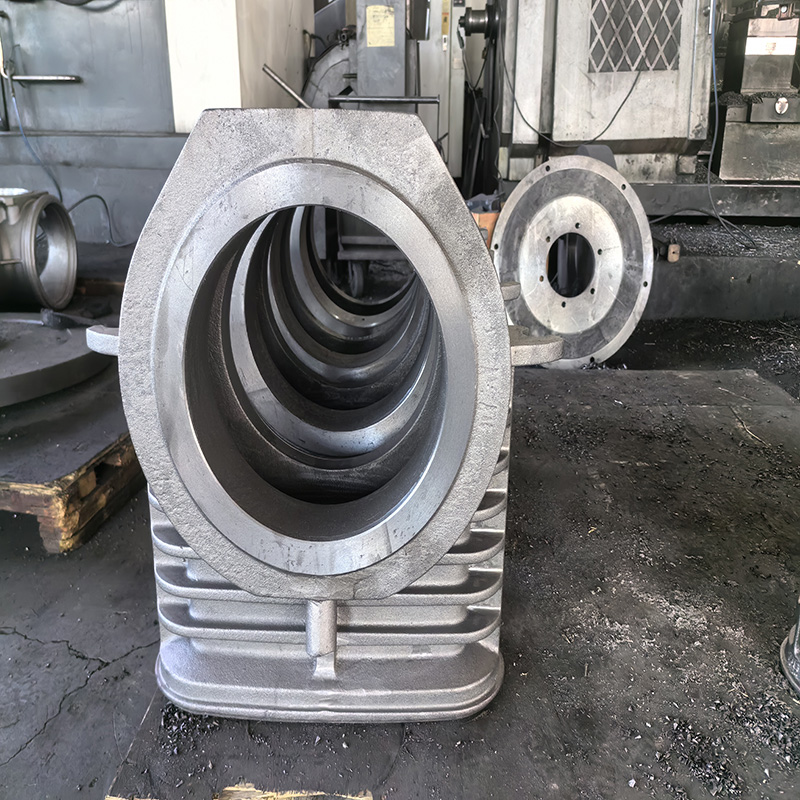
At Dandong City Pengxin Machinery Co., Ltd., weld repair is a controlled, documented operation. Qualified welders work to approved WPS documents, fillers are heat-traceable, and every repair is verified by NDT and recorded on a weld map. Large components — slag pots, valve bodies, and heavy equipment castings — are repaired and refurbished with the same rigor as new production.
Conclusion
Welding is the most powerful repair and joining tool available to the foundry — and the most dangerous when unqualified. The difference between a casting that serves for decades and one that fails at a weld lies in procedure discipline: the right process, the right filler, the right preheat, and the right post-weld treatment.
Dandong City Pengxin Machinery Co., Ltd. has performed qualified welding and repair on steel and iron castings since 1958 — following ASTM A488 and ISO 11970 procedures, with full documentation for customers in steel, mining, energy, and transportation.
If you need welding performed on a casting — new fabrication, defect repair, or refurbishment — send us the component details. We will qualify the procedure and document the result.
Dandong City Pengxin Machinery Co., Ltd. — Heavy Castings and Precision Machining, Since 1958.
Products
Hot News
Contact Us
- Phone:+86 15941574876
- Fax:0415-7875330
-
Email:jackma@px-casting.com